"The belief that one causes observable changes in the game environment allows the player to attribute positive events to him or herself, which leads to pleasurable emotions like joy and pride." (Klimmt & Hartmann 2006, pg. 159)
-Klimmt, Christoph, and Thilo Hartmann. "Effectance, self-efficacy, and the motivation to play video games." Playing video games: Motives, responses, and consequences (2006): 133-145
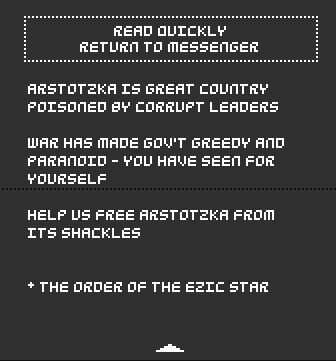
There is a game that I played during the summer as a demo called Papers, Please. It is by far one of the most interesting games I played in a long time. Now that the game is out it is getting rave reviews. The game is seemingly a perfect poster-child for gamification. It is a game that makes desk work fun!
The purpose of gamification is usually to create engagement amongst its users. All gamification efforts try to make mundane and routine tasks fun; and Papers, Please does an excellent job of creating engagement. However, its implementation also shows precisely why gamification as we know it is in trouble.
The premise of the game is that you are a citizen of a fictional Eastern European country in the 80's called Arstotzka who has been chosen as a border agent. Your job is to check passports and various other documents to ensure that the right people are let into wonderful Arstotzka and the bad guys are left out. That's it. Oh also you have to gain enough money to feed your family by processing enough people during the work day. If you do not make enough money then your family will end up being cold, starving, without a home, or dead. As the game progresses the government adds more rules and documents for entering the country. This of course means that there are more chances for you to have the wrong person enter the country. If you let the wrong person through you are fined a certain amount of money.
So let's start with why this game, at first, seems like a justification for gamification.
1) It makes boring work fun.
The game has taken meticulous, routine work and presented it in such a way that people are willing to pay money for the privilege of doing that work. Players continue to do the work, no matter how frustrating it may get and they are willing to learn how to increase their performance. All without any external incentive to do so. If it can work for a fictional border control office then why can it not work for other types of jobs?
2) The game has very little abstraction
This is work that happens/happened in real life. As a player you must check a person's passport photo against the person's face, you must ensure that the issuing city for the passport is from the correct country, you must ensure that a person has the correct visa for the stated reason for visiting the country and so on. Real people get paid real money to do the exact same activities every day. Other games abstract the actions that occur in their worlds. For instance, hacking a turret in Bioshock has no connection to hacking in the real world.
3) Work = Winning
The routine and mundane work is how you win and survive in the game. If you do everything correctly and efficiently then you make enough money to move into a nicer apartment and your family does not starve. Do not do the job correctly and you lose money instead of making it and may even be thrown in prison (the Astrokhazan government isn't exactly friendly).
So Papers, Please is directly related to the work of a border agent but this does not explain why it is considered fun. The dirty little secret is that even though the game play is about boring desk work it is the narrative that really makes the game interesting. The tedious work is just a way to create stories and bring the world to life. Sometimes a character will show up at the border crossing who is a disgraced athlete, or a shady nightclub owner, or part of some rebel group. They may be trying to get into the country or they may just show up to give you a warning. These encounters create moral choices for the player and leave the player reflecting on their actions. It is up to you whether you will simply do your job or whether you will try to beat the "system".
This makes Papers, Please a perfect indictment of the current point of view for gamification derisively called, "pointsification". According to this view Papers, Please would be a good game even without the story. All you need to do is reward good behaviour with points and punish bad behaviour by taking away points. The game does have an "Endless Mode" where the player can continue the game once the story is completed. However the game sessions are set to end fairly quickly and it seems that endless mode tests whether the tediousness and boredom of the game gets to you rather than prove how fun it is to process people through a border.
So the game proves that to create a good gamification platform you need people who can weave a good story, music, aesthetic, and interface design into a compelling piece of art. This is a tougher sell than sending a "gamification consultant" into a company to advise that they add points to their annual performance reviews but it really is the only way to go. It means that rather than being a cure-all, gamification efforts are difficult, involve risk, and are dependent on the work of dedicated and talented people. Just like all other business processes.
As a long time Starcraft player, this news makes me very happy.
‘StarCraft’ Gameplay Boosts Mental Flexibility, Says Study
By Riva GoldPlaying StarCraft can boost problem solving and creative thinking, according to a new study by
researchers at Queen Mary University of London and University College
London. Researchers found that those who engaged in the real-time
military strategy game improved their “cognitive flexibility,” or the
ability to adjust their thinking to meet different situations.
So we finally get to talk about the Europa Universalis series and how its mechanics relate to teaching the player about history.
Europa Universalis is a strategy game where you play as any
country in the world from the 1400’s to the 1800’s. You control the nation’s economy,
politics, and military with no real goals as what you are supposed to do. You
can try to conquer the entire world or be content to simply survive through
four hundred years of history. There are four games in the series; the game’s main focus has been Europe (hence the name) but as the
series progressed they have made it more and more viable to play as any country
in the world that existed in that time period.
However there is no such thing as balance. Playing as France
in 1495 will be easier than playing as the Iroquois in 1790. This is one of the
reasons why EU is much better game for teaching history than Civilization. It
doesn’t mean that you are forced to play history though. If you want to play as the Xhosa in the South Africa in the 1400’s then so be it; just be prepared for the eventual colonisation. Or you can start a worldwide conquest as
China in the 1490’s. You can do what you want but you are always constrained by
the initial historical setup. Other than these constraints there are four game
mechanics that force a player to gain a better understanding of history and geography
when playing the game: cores, missions, events, and casus belli.
Everything I know about European geography, I learned from
cores. The EU game designers split the world map into “provinces”; these are
small portions of the map that have their own population, religion, and
economic output. For instance Ile de France and Essex are provinces. As a
country, you start with a set of provinces, however you may find that other
countries hold provinces that you believe to be yours. These provinces will be
your cores. However, a province may have multiple cores. For instance, France,
Prussia and the non-existent country of Germany may all have Alsace as a core
in 1530. If another country occupies your core provinces then you get a chance
to fight for that province. Understanding which countries have what provinces
as cores is also important for you as an invader. Yes, tiny Switzerland may
have one province that you want to take over but if it also happens to be
France’s core then you might not want to occupy it unless you can take on
France. And it is always hard to take on France. Trust me.
Missions enforce history for nations and therefore teach the
player about the history of the country. Each country has country specific missions
that provide the player with an understanding of how that country historically
developed. The player does not have to choose these missions but can get an
understanding of how the country evolved in history by looking through the
missions. For instance, playing as England, the player can choose the “Hail
Brittania!” mission where she must create a certain number of ships and is then
given the reward of a more effective navy. This strategy is similar to the
historical combat strategy of England. The computer also follows these missions,
which makes the game have a historical feel.
Events enforce history over the entire world and therefore
teach the player about important historical circumstances. Events are country
specific or region specific occurrences that radically change the game. In EU 2
many countries had deterministic events that always occurred. The most infamous
being the Spanish gold event where in the 1500’s Spain would suffer massive
inflation and economic hardships because of the importation of gold from the
New World. Even when the player did not produce as much gold in Peru, or did not
even colonise the New World, the event would occur. These events really teach
history to the player since a good player would know when these events occurred
and would prepare for them or take advantage of the situation. However many
players felt that their agency was compromised by following a deterministic path.
So, in EU 3 the designers created very few deterministic events. The big one that
they never took out was the introduction of Protestantism in Europe. No matter
what you do, this will always happen in the mid to late 1500’s. EU4 uses dynamic-historical events that occur based on the players actions. The reduction
of events from EU2 to EU3 and the middle ground provided by EU4 is a good example of how gameplay and educational aspects of a purposeful game can be at odds.
Casus belli do not teach a particular part of history but
like Civ provide a concept that is important for understanding
history. Unlike other games where you can declare war at any time, in EU you
have to have a reason. The reasons for going to war depend on what obligations
you have (or made up) and can affect how the war progresses. Maybe you want to
fight for another country’s independence, defeat the heretic, gain some
colonies, or reclaim “your” lost territory. The casus belli mechanic ensures
that the player learns that there are many different reasons for war and that
these initial reasons shape the war and its consequences on the aggressor. It is much easier to wage and win a war for a colony than to change a nation's religion.
All in all the game is a good example of how mechanics can
teach a player. In EU, a person must understand how the HRE electoral system
works, if they want to survive as a country in Eastern Europe. Knowing that Spain
is more likely to attack Protestant countries due to its history is important
information for a player who is controlling the break-away country of Aragon and
has to make a decision of which religion to follow.
Paradox the makers of EU, also have a series called Crusader
Kings that focuses on Europe, the Middle East and parts of Africa from 865
-1445 and Victoria, a game where you can play almost any country in the world
from 1835 to 1935. Each game has special game mechanics that fit their specific
time period and provide a chance for more learning. For instance, I know that
Great Britain recently changed their succession laws from agnatic-cognatic
primogeniture to absolute cognatic. Once learning is
directly baked into a game’s mechanics there is no end to what you can teach.
First off I would like to say that I love Civilization. I used to play Civ regularly. Some of my best friends are Civ players. But as I was researching material for another post I came across many people claiming that students have learned about history by playing Civ. The article mentions that Civilization III was used to engage
students to get them to learn more about social studies and history:
[Civ
III is] introducing students to concepts such as monotheism or
monarchy, but it may be an even better way of helping them tie together
the disparate periods of history. A challenge of teaching world history
is how to present students with thousands of years of developments
across all civilizations without being Western-centric. Civilization
III’s scope extends well beyond the Greco-Roman realm and thus invites us to take a global perspective on historical developments.
However, I believe that Civ is a bad purposeful game for learning history.
What is Civilization? Well this is a good start. But the shorter version is that Civ is a strategy game where you start as a small band of settlers of a Civilization. If you survive external and internal threats then you can progress through history to become the dominant civilization on the planet through violent or non-violent means. People think that Civ players must be learning about history because Civ players play as civilizations like the Romans, the Mali, and the Incas,
This is the trap that Civilization sets for history buffs and educators. By wrapping itself in a historical aesthetic, Civ makes it seem like students learn from playing the game. Rather than teach historical concepts Civilization exposes players to these concepts. If I didn't know that there was such a thing as monarchy then I would learn that there is such a concept because I need to research it in the game. However I can play the game forever without knowing what monarchy actually is in reality and instead just that it grants the civilization: Rate Cap: 10; Work Cap: 2; Assimilalation Rate: 2; Draft Limit: 2; Military Police Limit: 3; and Resistance Modifier VS Anarchy: -5
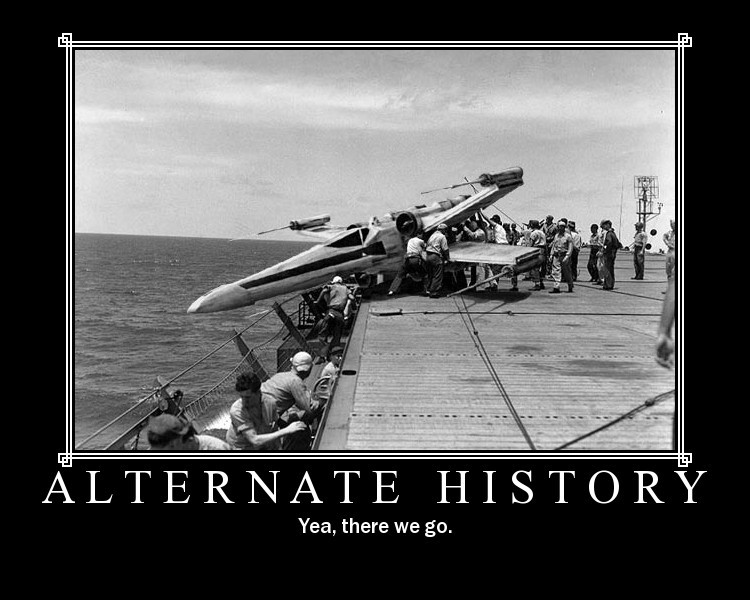
Proponents of Civ as an educational history game also state that students can engage in "Alternate History".
these [minority] kids took great joy in studying hypothetical history, exploring the conditions under which colonial conquests might have played out differently.
However the mechanics of the game itself really do not afford the ability to give you an "alternate history". I can create games where I play as the Iroquois in their historically accurate geographical location but once I start the game what I am learning? That if the Iroquois tech-rushed gunpowder then the Europeans wouldn't have stood a chance? This seems like a rather shallow understanding of history.
Don't get me wrong. There are mechanics in a Civ game that make it more than just a way to expose people to unfamiliar civilizations and leaders. You learn about the value of resources, project planning, and getting information out of data. In fact, Civ is a much better game for teaching project managers than it is for teaching history or historical concepts. Why? Because to be good at Civ you need to have excellent management skills; you do not need to understand the historical ramifications of your actions. Civ can only spark an interest that is then fueled by reading and study OUTSIDE of the Civ game.
A good argument for what Civ is and isn't is the unofficial sequel to Civ II: Sid Meier's Alpha Centauri or SMAC. SMAC is a great game that uses Civ game mechanics in a science fiction world. Therefore students cannot learn about history or geography since the action takes place on an alien planet. But they do learn the same management skills that they learn in Civ. Just like Civ though, it does not stop the game from exposing you to incredible ideas about philosophy, religion, and humanity's approach to technology.
For a time, everyday I heard these quotes. I started reading books I never even heard of because of these quotes. But I could have ignored
every single one of them as well because to play the game I didn't need to understand
what they meant; just like how Civ players do not need to understand history to play the game.
However there are some games that inadvertently teach players about history and geography. My next post will be about how the mechanics of these games force players to understand historical and sociological concepts since they are core mechanics of the game.