
Sunday, October 6, 2013
Off to Milan in December
Well after a bit of work over the year, the first paper on the effect of games on the IS discipline has been accepted! I will present it at the Workshop for Information Technology And Systems in Milan. I guess I should play some Championship Manager so that I can fit in.

Thursday, September 26, 2013
That Wonderful Feeling
"The belief that one causes observable changes in the game environment allows the player to attribute positive events to him or herself, which leads to pleasurable emotions like joy and pride." (Klimmt & Hartmann 2006, pg. 159)
-Klimmt, Christoph, and Thilo Hartmann. "Effectance, self-efficacy, and the motivation to play video games." Playing video games: Motives, responses, and consequences (2006): 133-145

-Klimmt, Christoph, and Thilo Hartmann. "Effectance, self-efficacy, and the motivation to play video games." Playing video games: Motives, responses, and consequences (2006): 133-145
Wednesday, September 25, 2013
Papers,Please: The Future of Gamification
There is a game that I played during the summer as a demo called Papers, Please. It is by far one of the most interesting games I played in a long time. Now that the game is out it is getting rave reviews. The game is seemingly a perfect poster-child for gamification. It is a game that makes desk work fun!
The purpose of gamification is usually to create engagement amongst its users. All gamification efforts try to make mundane and routine tasks fun; and Papers, Please does an excellent job of creating engagement. However, its implementation also shows precisely why gamification as we know it is in trouble.

The premise of the game is that you are a citizen of a fictional Eastern European country in the 80's called who has been chosen as a border agent. Your job is to check passports and various other documents to ensure that the right people are let into wonderful and the bad guys are left out. That's it. Oh also you have to gain enough money to feed your family by processing enough people during the work day. If you do not make enough money then your family will end up being cold, starving, without a home, or dead. As the game progresses the government adds more rules and documents for entering the country. This of course means that there are more chances for you to have the wrong person enter the country. If you let the wrong person through you are fined a certain amount of money.

So let's start with why this game, at first, seems like a justification for gamification.
1) It makes boring work fun.
The game has taken meticulous, routine work and presented it in such a way that people are willing to pay money for the privilege of doing that work. Players continue to do the work, no matter how frustrating it may get and they are willing to learn how to increase their performance. All without any external incentive to do so. If it can work for a fictional border control office then why can it not work for other types of jobs?

2) The game has very little abstraction
This is work that happens/happened in real life. As a player you must check a person's passport photo against the person's face, you must ensure that the issuing city for the passport is from the correct country, you must ensure that a person has the correct visa for the stated reason for visiting the country and so on. Real people get paid real money to do the exact same activities every day. Other games abstract the actions that occur in their worlds. For instance, hacking a turret in Bioshock has no connection to hacking in the real world.

3) Work = Winning
The routine and mundane work is how you win and survive in the game. If you do everything correctly and efficiently then you make enough money to move into a nicer apartment and your family does not starve. Do not do the job correctly and you lose money instead of making it and may even be thrown in prison (the Astrokhazan government isn't exactly friendly).

So Papers, Please is directly related to the work of a border agent but this does not explain why it is considered fun. The dirty little secret is that even though the game play is about boring desk work it is the narrative that really makes the game interesting. The tedious work is just a way to create stories and bring the world to life. Sometimes a character will show up at the border crossing who is a disgraced athlete, or a shady nightclub owner, or part of some rebel group. They may be trying to get into the country or they may just show up to give you a warning. These encounters create moral choices for the player and leave the player reflecting on their actions. It is up to you whether you will simply do your job or whether you will try to beat the "system".

This makes Papers, Please a perfect indictment of the current point of view for gamification derisively called, "pointsification". According to this view Papers, Please would be a good game even without the story. All you need to do is reward good behaviour with points and punish bad behaviour by taking away points. The game does have an "Endless Mode" where the player can continue the game once the story is completed. However the game sessions are set to end fairly quickly and it seems that endless mode tests whether the tediousness and boredom of the game gets to you rather than prove how fun it is to process people through a border.

So the game proves that to create a good gamification platform you need people who can weave a good story, music, aesthetic, and interface design into a compelling piece of art. This is a tougher sell than sending a "gamification consultant" into a company to advise that they add points to their annual performance reviews but it really is the only way to go. It means that rather than being a cure-all, gamification efforts are difficult, involve risk, and are dependent on the work of dedicated and talented people. Just like all other business processes.

The purpose of gamification is usually to create engagement amongst its users. All gamification efforts try to make mundane and routine tasks fun; and Papers, Please does an excellent job of creating engagement. However, its implementation also shows precisely why gamification as we know it is in trouble.
The premise of the game is that you are a citizen of a fictional Eastern European country in the 80's called who has been chosen as a border agent. Your job is to check passports and various other documents to ensure that the right people are let into wonderful and the bad guys are left out. That's it. Oh also you have to gain enough money to feed your family by processing enough people during the work day. If you do not make enough money then your family will end up being cold, starving, without a home, or dead. As the game progresses the government adds more rules and documents for entering the country. This of course means that there are more chances for you to have the wrong person enter the country. If you let the wrong person through you are fined a certain amount of money.

So let's start with why this game, at first, seems like a justification for gamification.
1) It makes boring work fun.
The game has taken meticulous, routine work and presented it in such a way that people are willing to pay money for the privilege of doing that work. Players continue to do the work, no matter how frustrating it may get and they are willing to learn how to increase their performance. All without any external incentive to do so. If it can work for a fictional border control office then why can it not work for other types of jobs?

2) The game has very little abstraction
This is work that happens/happened in real life. As a player you must check a person's passport photo against the person's face, you must ensure that the issuing city for the passport is from the correct country, you must ensure that a person has the correct visa for the stated reason for visiting the country and so on. Real people get paid real money to do the exact same activities every day. Other games abstract the actions that occur in their worlds. For instance, hacking a turret in Bioshock has no connection to hacking in the real world.
3) Work = Winning
The routine and mundane work is how you win and survive in the game. If you do everything correctly and efficiently then you make enough money to move into a nicer apartment and your family does not starve. Do not do the job correctly and you lose money instead of making it and may even be thrown in prison (the Astrokhazan government isn't exactly friendly).

So Papers, Please is directly related to the work of a border agent but this does not explain why it is considered fun. The dirty little secret is that even though the game play is about boring desk work it is the narrative that really makes the game interesting. The tedious work is just a way to create stories and bring the world to life. Sometimes a character will show up at the border crossing who is a disgraced athlete, or a shady nightclub owner, or part of some rebel group. They may be trying to get into the country or they may just show up to give you a warning. These encounters create moral choices for the player and leave the player reflecting on their actions. It is up to you whether you will simply do your job or whether you will try to beat the "system".
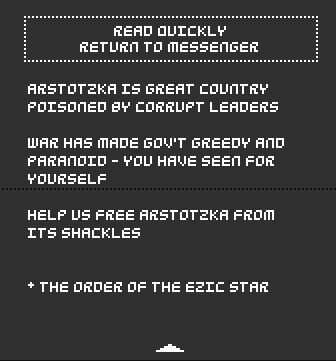
This makes Papers, Please a perfect indictment of the current point of view for gamification derisively called, "pointsification". According to this view Papers, Please would be a good game even without the story. All you need to do is reward good behaviour with points and punish bad behaviour by taking away points. The game does have an "Endless Mode" where the player can continue the game once the story is completed. However the game sessions are set to end fairly quickly and it seems that endless mode tests whether the tediousness and boredom of the game gets to you rather than prove how fun it is to process people through a border.

So the game proves that to create a good gamification platform you need people who can weave a good story, music, aesthetic, and interface design into a compelling piece of art. This is a tougher sell than sending a "gamification consultant" into a company to advise that they add points to their annual performance reviews but it really is the only way to go. It means that rather than being a cure-all, gamification efforts are difficult, involve risk, and are dependent on the work of dedicated and talented people. Just like all other business processes.

Sunday, September 8, 2013
Game Patterns: Why Every "Intro to Programming" Class Should Begin with a Children's Card Game
With my classes starting and me nerding it up with friends last week, I didn't have a lot of time for the blog. But I did think of a few ideas which I now have a chance to write down.
 We have already discussed game mechanics, dynamics, and aesthetics but we have not discussed how to use this knowledge to aid gameful design. Today we will start off by talking about dynamics. Paradoxically, I thought of this idea when I was watching a video on aesthetics. Below, Extra Credit talks about how we have been getting it all wrong when discussing game genres. It really gets interesting around the 2 minute mark.
The video is perfectly right; it is rather silly to use the mechanics and dynamics of a medium to define its genres but it can be useful. By describing a movie as a "wide angle shot" movie, I know that it will feature many panoramas and vistas. Therefore if someone were to tell me that an educational video on nature was a "wide angle shot" movie then I could guess that it might show some amazing panoramas of natural wonders.

This should be the same for video games. We know that video games can be educational but what types of video games are best for teaching a particular type of subject? And is it possible to determine the types of dynamics that are needed to effectively teach and train specific subjects? Before we can answer that question we first need to discuss a fundamental concept that I call game patterns.

A game pattern is a set of game dynamics that define a game. You can have two very different games that share a pattern. This is different from a genre since, as mentioned by Extra Credit, it makes more sense for genres to be focused on how the medium makes us feel rather than the dynamics that we play. However, understanding a game's dynamics can be used to understand what it can teach us. For instance, you can have two games, one with a challenge aesthetic and another with a discovery aesthetic; but both could have the same game pattern where the player must navigate a character in a 2D environment. In one game the player may have to defeat a number of challenging enemies and in the other game the player may just need to navigate through the world to discover new and crazy things. Both have vastly different aesthetics but have very similar dynamics.


But if Fez and Rogue Legacy share a game pattern then does that mean they are teaching players the same thing? Since both games involve navigation through the environment, they both test the player's navigational skills, as well as reflexes needed to correctly jump onto a platform. As long the games share the same 2D platformer game pattern then the player will learn these things. Of course since the games are different this may mean that the player may learn things in one game that they do not learn in the other.

Moving on to more cognitive skills, as I mentioned in the last post, there is evidence that playing Starcraft increases cognitive flexibility in players. Cognitive flexibility is defined as "the ability to coordinate attentional processes between two or more concurrent or alternating operations". With this definition, ANYONE who has played Starcraft could tell that it increases cognitive flexibility but the real question is whether other games that follow the same game pattern as Starcraft will provide the same results. How similar do the games need to be? You could say that Europa Universalis is also a real-time strategy game where the player must switch between different forms of information; but the player has the ability to pause the game in EU and not in Starcraft. Is this difference fundamental for the game's effectiveness in teaching cognitive flexibility?

By analysing the dynamics and mechanics of a game can we begin to isolate the ways in which it can teach us skills that are useful outside of a game? For instance, I had a conversation with a friend about a bastion of nerdom: Magic: The Gathering (MtG). For those of you who do not know about Magic the Gathering, this video should give you an idea.
So it is very similar to Pokemon and Yu-Gi-Oh and other collectible card games. MtG can teach you about basic math since it involves keeping track of your life points, the life points of your creatures, effects on your creatures, and so on. But as Finn says in the video above, the game really teaches logic. A player can use a set of cards that has several "combos" that, when played together, have a devastating effect on their opponent. These combos can only be identified by studying how the cards affect other cards in the game. It is possible that the game creators did not even expect for the cards to be played together.

Most of these combos are a set of "if -then-else" statements that ensure that the player does well in the game. Now the beauty of using specific dynamics to teach a concept is that the designer is free to use whatever aesthetic they want for the game. If your audience likes to day dream then you can use a fantasy card game where the player pretends to be a powerful wizard. If your audience is competitive then you can create a dueling-card game where the player is trying to destroy their opponent (like Jake), or if your audience is inquisitive then you can design a game where the player tries to gain and learn about new and exciting creatures (like Pokemon). If the basic game pattern is the same then the player still needs to use logic to do well in the game. So the aesthetic is the "hook" (why people enjoy the game and their motivation for playing) and the pattern delivers the lesson. In the case of MtG, and other duel type games, it is the lure of domination that makes you learn the how to use logic to win the game.

For my research, I would love to setup a similar study as the Starcraft study to determine whether a collectible card game that has several combos is best for teaching a context that involves logic like computer programming. A card game where the player must use several complicated combos to win may provide a better chance for learning logic than a game where combos are not so important.

Just like the Starcraft study I could find 70 people who have never played collectible card games or know how to program and subjects would play in a week long Magic tournament, Pokemon tournament, or go outside or whatever non-gamers do. I could then teach programming to all of the subjects and ask them to code a simple program. It would be interesting to see whether those who competed in the Magic tournament learned significantly faster, or wrote better code, than those who did not. Of course I would have to get this past ethics review since there could be possible side effects.


The video is perfectly right; it is rather silly to use the mechanics and dynamics of a medium to define its genres but it can be useful. By describing a movie as a "wide angle shot" movie, I know that it will feature many panoramas and vistas. Therefore if someone were to tell me that an educational video on nature was a "wide angle shot" movie then I could guess that it might show some amazing panoramas of natural wonders.

This should be the same for video games. We know that video games can be educational but what types of video games are best for teaching a particular type of subject? And is it possible to determine the types of dynamics that are needed to effectively teach and train specific subjects? Before we can answer that question we first need to discuss a fundamental concept that I call game patterns.
A game pattern is a set of game dynamics that define a game. You can have two very different games that share a pattern. This is different from a genre since, as mentioned by Extra Credit, it makes more sense for genres to be focused on how the medium makes us feel rather than the dynamics that we play. However, understanding a game's dynamics can be used to understand what it can teach us. For instance, you can have two games, one with a challenge aesthetic and another with a discovery aesthetic; but both could have the same game pattern where the player must navigate a character in a 2D environment. In one game the player may have to defeat a number of challenging enemies and in the other game the player may just need to navigate through the world to discover new and crazy things. Both have vastly different aesthetics but have very similar dynamics.


But if Fez and Rogue Legacy share a game pattern then does that mean they are teaching players the same thing? Since both games involve navigation through the environment, they both test the player's navigational skills, as well as reflexes needed to correctly jump onto a platform. As long the games share the same 2D platformer game pattern then the player will learn these things. Of course since the games are different this may mean that the player may learn things in one game that they do not learn in the other.

Moving on to more cognitive skills, as I mentioned in the last post, there is evidence that playing Starcraft increases cognitive flexibility in players. Cognitive flexibility is defined as "the ability to coordinate attentional processes between two or more concurrent or alternating operations". With this definition, ANYONE who has played Starcraft could tell that it increases cognitive flexibility but the real question is whether other games that follow the same game pattern as Starcraft will provide the same results. How similar do the games need to be? You could say that Europa Universalis is also a real-time strategy game where the player must switch between different forms of information; but the player has the ability to pause the game in EU and not in Starcraft. Is this difference fundamental for the game's effectiveness in teaching cognitive flexibility?

By analysing the dynamics and mechanics of a game can we begin to isolate the ways in which it can teach us skills that are useful outside of a game? For instance, I had a conversation with a friend about a bastion of nerdom: Magic: The Gathering (MtG). For those of you who do not know about Magic the Gathering, this video should give you an idea.
So it is very similar to Pokemon and Yu-Gi-Oh and other collectible card games. MtG can teach you about basic math since it involves keeping track of your life points, the life points of your creatures, effects on your creatures, and so on. But as Finn says in the video above, the game really teaches logic. A player can use a set of cards that has several "combos" that, when played together, have a devastating effect on their opponent. These combos can only be identified by studying how the cards affect other cards in the game. It is possible that the game creators did not even expect for the cards to be played together.

Most of these combos are a set of "if -then-else" statements that ensure that the player does well in the game. Now the beauty of using specific dynamics to teach a concept is that the designer is free to use whatever aesthetic they want for the game. If your audience likes to day dream then you can use a fantasy card game where the player pretends to be a powerful wizard. If your audience is competitive then you can create a dueling-card game where the player is trying to destroy their opponent (like Jake), or if your audience is inquisitive then you can design a game where the player tries to gain and learn about new and exciting creatures (like Pokemon). If the basic game pattern is the same then the player still needs to use logic to do well in the game. So the aesthetic is the "hook" (why people enjoy the game and their motivation for playing) and the pattern delivers the lesson. In the case of MtG, and other duel type games, it is the lure of domination that makes you learn the how to use logic to win the game.

For my research, I would love to setup a similar study as the Starcraft study to determine whether a collectible card game that has several combos is best for teaching a context that involves logic like computer programming. A card game where the player must use several complicated combos to win may provide a better chance for learning logic than a game where combos are not so important.

Just like the Starcraft study I could find 70 people who have never played collectible card games or know how to program and subjects would play in a week long Magic tournament, Pokemon tournament, or go outside or whatever non-gamers do. I could then teach programming to all of the subjects and ask them to code a simple program. It would be interesting to see whether those who competed in the Magic tournament learned significantly faster, or wrote better code, than those who did not. Of course I would have to get this past ethics review since there could be possible side effects.

Monday, August 26, 2013
I KNEW IT!
As a long time Starcraft player, this news makes me very happy.
Playing StarCraft can boost problem solving and creative thinking, according to a new study by researchers at Queen Mary University of London and University College London. Researchers found that those who engaged in the real-time military strategy game improved their “cognitive flexibility,” or the ability to adjust their thinking to meet different situations. ‘StarCraft’ Gameplay Boosts Mental Flexibility, Says Study
A Unified Gaming Theory: Can We Turn Game Design Into Baking?
I am back from my Ghana vacation. It was inspiring, relaxing, and wonderful but it is time to get back to the real world (so to speak). I had planned to sleep in and then catch up on all of my work later in the day but I woke up early and found something interesting on the Internet. So here I am writing this post. This post has been brought to you by our sponsor, Jetlag. Use Jetlag for all your productivity needs!

What I found was this interesting article on Game Jar by Mr. Geoff Hankes. I suggest that you read it before moving ahead with the rest of the post. However here are the highlights.
First off let me just say that Crusader Kings 2 is AMAZING!
Ahem. Well anyways, as i read through the article I thought about the research I have seen in the past year. The concepts in the research provided a perfect framework for understanding the feelings of the author; specifically the discussion of mechanics vs. aesthetics. Story-telling in certain games did not engage him because they lacked a particular aesthetic but Crusader Kings 2 filled that need because its mechanics were used in service to creating a player driven story rather than the story being an excuse for the game's mechanics. But the last sentence I highlighted is really intriguing to me. The author assumes that every other gamer will feel and play as he does ("don't we role-play in every game?"). Some people probably do not.

The discussion of aesthetics and mechanics does not focus on the player, only the reasons for the affinity that players have for particular games. However, several researchers have identified player profiles that have specific preferences based on their style. Here is an article that tries to merge all of this research. From the article, and based on the profile found in the link, I would say that Geoff is a Idealist/Socialiser who is interested in the interplay between people and characters. The shallowness of these relationships in most video games stories is what makes them so frustrating to him. Crusader Kings 2 allows him to "play" with complex relationships, but rather than just present them as a set of numbers, the game turns these interactions into a coherent story that the player can control.

What is really exciting is what this all means for research. If we can determine the types of mechanics that create a specific aesthetic and the aesthetics that appeals to particular player profiles then we have created a Unified Gaming Theory. Even more excitingly, we can transform Game Design from a messy art-form into a more manageable process. This does not mean that game design becomes, "by the book", or uncreative but manageable. I would say that it is akin to baking.

In the 21st century we are very good at making a basic chocolate cake. We even have recipes that tell us how to do it. However, if all chocolate cakes tasted the same then it would be a sad, sad world. People take these recipes and change them for specific tastes. For instance, if we know that a person does not like sweet things we can make the cake with dark chocolate instead of milk chocolate. By understanding the interplay between mechanics (the difference between milk and dark chocolate), aesthetics (sweet vs. bitter taste), and player profiles (non sweet tooth), we will be able to tell that Geoff would have loved Crusader Kings 2 before he even played it. And we would be able to make a similar game for people who are more interested in rational management instead of relationships. Making everyone happy. Hmm, looks like this might be next year's project!


What I found was this interesting article on Game Jar by Mr. Geoff Hankes. I suggest that you read it before moving ahead with the rest of the post. However here are the highlights.
"Mostly, it’s because I feel that the majority of stories in video games are just plain bad compared to other mediums. Characters are little more than arch-types and cliches to me. They’re generally flat, boring, underdeveloped shadows of actual characters that I cannot even begin to relate to in any way, shape, or form. Plots are often non-nonsensical roller coaster rides that move you from one set piece to the next, so you can shoot another army guy or alien in the face without any real consequence to the greater context of the world that you’re in."....
That’s why I’ve mostly consumed games as a set of mechanics, and how those mechanics are entertaining. In doing so, I’ve approached games as an academic critic. I’ve been reading my reviews lately and come to realize they’re written more as papers, and are often dry, technical. Which is what they should be if I’m only focusing on mechanics....
For those of you that don’t know, Crusader Kings II is a game that puts you into the role of a medieval ruler – a simulation at its core, but has many “gamey” parts to it as well. As you play a character, you gain prestige and piety which contribute to your dynastic score when your current playable character dies. The only clear cut goal in the game is to have someone bearing your dynasty’s name by the year 1453. Other than that, players are on their own to create their own goals and achievements. It is one of the hardest games I’ve ever played. And its the only one in a long time to make me engage with it on an emotional level.
...
So why did Crusader Kings II touch me on such an emotional level? How did this game which is ostensibly a collection of menus and hidden background calculations get through to me in such a powerful way? It’s because through those systems that we can become exposed to those important aspects of characterization. I experienced [my character's] life during his triumphs, his losses, and his frustrations. Of course, there is an amount of role-playing going on here, but don’t we role-play in every game?
First off let me just say that Crusader Kings 2 is AMAZING!
Ahem. Well anyways, as i read through the article I thought about the research I have seen in the past year. The concepts in the research provided a perfect framework for understanding the feelings of the author; specifically the discussion of mechanics vs. aesthetics. Story-telling in certain games did not engage him because they lacked a particular aesthetic but Crusader Kings 2 filled that need because its mechanics were used in service to creating a player driven story rather than the story being an excuse for the game's mechanics. But the last sentence I highlighted is really intriguing to me. The author assumes that every other gamer will feel and play as he does ("don't we role-play in every game?"). Some people probably do not.

The discussion of aesthetics and mechanics does not focus on the player, only the reasons for the affinity that players have for particular games. However, several researchers have identified player profiles that have specific preferences based on their style. Here is an article that tries to merge all of this research. From the article, and based on the profile found in the link, I would say that Geoff is a Idealist/Socialiser who is interested in the interplay between people and characters. The shallowness of these relationships in most video games stories is what makes them so frustrating to him. Crusader Kings 2 allows him to "play" with complex relationships, but rather than just present them as a set of numbers, the game turns these interactions into a coherent story that the player can control.
What is really exciting is what this all means for research. If we can determine the types of mechanics that create a specific aesthetic and the aesthetics that appeals to particular player profiles then we have created a Unified Gaming Theory. Even more excitingly, we can transform Game Design from a messy art-form into a more manageable process. This does not mean that game design becomes, "by the book", or uncreative but manageable. I would say that it is akin to baking.

In the 21st century we are very good at making a basic chocolate cake. We even have recipes that tell us how to do it. However, if all chocolate cakes tasted the same then it would be a sad, sad world. People take these recipes and change them for specific tastes. For instance, if we know that a person does not like sweet things we can make the cake with dark chocolate instead of milk chocolate. By understanding the interplay between mechanics (the difference between milk and dark chocolate), aesthetics (sweet vs. bitter taste), and player profiles (non sweet tooth), we will be able to tell that Geoff would have loved Crusader Kings 2 before he even played it. And we would be able to make a similar game for people who are more interested in rational management instead of relationships. Making everyone happy. Hmm, looks like this might be next year's project!

Monday, August 12, 2013
Replaying History: Europa Universalis as a European History Teacher
So we finally get to talk about the Europa Universalis series and how its mechanics relate to teaching the player about history.


However there is no such thing as balance. Playing as France in 1495 will be easier than playing as the Iroquois in 1790. This is one of the reasons why EU is much better game for teaching history than Civilization. It doesn’t mean that you are forced to play history though. If you want to play as the Xhosa in the South Africa in the 1400’s then so be it; just be prepared for the eventual colonisation. Or you can start a worldwide conquest as China in the 1490’s. You can do what you want but you are always constrained by the initial historical setup. Other than these constraints there are four game mechanics that force a player to gain a better understanding of history and geography when playing the game: cores, missions, events, and casus belli.
Europa Universalis is a strategy game where you play as any
country in the world from the 1400’s to the 1800’s. You control the nation’s economy,
politics, and military with no real goals as what you are supposed to do. You
can try to conquer the entire world or be content to simply survive through
four hundred years of history. There are four games in the series; the game’s main focus has been Europe (hence the name) but as the
series progressed they have made it more and more viable to play as any country
in the world that existed in that time period.
However there is no such thing as balance. Playing as France in 1495 will be easier than playing as the Iroquois in 1790. This is one of the reasons why EU is much better game for teaching history than Civilization. It doesn’t mean that you are forced to play history though. If you want to play as the Xhosa in the South Africa in the 1400’s then so be it; just be prepared for the eventual colonisation. Or you can start a worldwide conquest as China in the 1490’s. You can do what you want but you are always constrained by the initial historical setup. Other than these constraints there are four game mechanics that force a player to gain a better understanding of history and geography when playing the game: cores, missions, events, and casus belli.

Everything I know about European geography, I learned from
cores. The EU game designers split the world map into “provinces”; these are
small portions of the map that have their own population, religion, and
economic output. For instance Ile de France and Essex are provinces. As a
country, you start with a set of provinces, however you may find that other
countries hold provinces that you believe to be yours. These provinces will be
your cores. However, a province may have multiple cores. For instance, France,
Prussia and the non-existent country of Germany may all have Alsace as a core
in 1530. If another country occupies your core provinces then you get a chance
to fight for that province. Understanding which countries have what provinces
as cores is also important for you as an invader. Yes, tiny Switzerland may
have one province that you want to take over but if it also happens to be
France’s core then you might not want to occupy it unless you can take on
France. And it is always hard to take on France. Trust me.

Missions enforce history for nations and therefore teach the
player about the history of the country. Each country has country specific missions
that provide the player with an understanding of how that country historically
developed. The player does not have to choose these missions but can get an
understanding of how the country evolved in history by looking through the
missions. For instance, playing as England, the player can choose the “Hail
Brittania!” mission where she must create a certain number of ships and is then
given the reward of a more effective navy. This strategy is similar to the
historical combat strategy of England. The computer also follows these missions,
which makes the game have a historical feel.

Events enforce history over the entire world and therefore
teach the player about important historical circumstances. Events are country
specific or region specific occurrences that radically change the game. In EU 2
many countries had deterministic events that always occurred. The most infamous
being the Spanish gold event where in the 1500’s Spain would suffer massive
inflation and economic hardships because of the importation of gold from the
New World. Even when the player did not produce as much gold in Peru, or did not
even colonise the New World, the event would occur. These events really teach
history to the player since a good player would know when these events occurred
and would prepare for them or take advantage of the situation. However many
players felt that their agency was compromised by following a deterministic path.
So, in EU 3 the designers created very few deterministic events. The big one that
they never took out was the introduction of Protestantism in Europe. No matter
what you do, this will always happen in the mid to late 1500’s. EU4 uses dynamic-historical events that occur based on the players actions. The reduction
of events from EU2 to EU3 and the middle ground provided by EU4 is a good example of how gameplay and educational aspects of a purposeful game can be at odds.

Casus belli do not teach a particular part of history but
like Civ provide a concept that is important for understanding
history. Unlike other games where you can declare war at any time, in EU you
have to have a reason. The reasons for going to war depend on what obligations
you have (or made up) and can affect how the war progresses. Maybe you want to
fight for another country’s independence, defeat the heretic, gain some
colonies, or reclaim “your” lost territory. The casus belli mechanic ensures
that the player learns that there are many different reasons for war and that
these initial reasons shape the war and its consequences on the aggressor. It is much easier to wage and win a war for a colony than to change a nation's religion.

All in all the game is a good example of how mechanics can
teach a player. In EU, a person must understand how the HRE electoral system
works, if they want to survive as a country in Eastern Europe. Knowing that Spain
is more likely to attack Protestant countries due to its history is important
information for a player who is controlling the break-away country of Aragon and
has to make a decision of which religion to follow.

Paradox the makers of EU, also have a series called Crusader
Kings that focuses on Europe, the Middle East and parts of Africa from 865
-1445 and Victoria, a game where you can play almost any country in the world
from 1835 to 1935. Each game has special game mechanics that fit their specific
time period and provide a chance for more learning. For instance, I know that
Great Britain recently changed their succession laws from agnatic-cognatic
primogeniture to absolute cognatic. Once learning is
directly baked into a game’s mechanics there is no end to what you can teach.


Subscribe to:
Posts (Atom)